Video marketing is no longer just a tactical option for B2B tech and SaaS brands, it has become the primary infrastructure for digital buyer engagement. Over 90% of businesses now leverage video to communicate value, educate audiences, and capture pipeline. However, the landscape is shifting under the pressure of rapid AI adoption, shifting buyer behaviors, and changing platform algorithms.
In 2027, the challenge for B2B brands will not be whether to produce video, but how to stand out in an increasingly saturated market. As fully automated AI video creation becomes more common, generic content is driving viewer fatigue and weakening buyer trust. To build meaningful pipeline and authority, SaaS companies must move beyond high-volume, low-intent media and adopt a more strategic and timed visual framework.
In this report Burnwe outlines its 10 data-backed predictions defining the future of B2B video marketing for AI and SaaS companies, exploring how category leaders will blend technology with creative strategy to scale authority and drive measurable ROI.
Video Marketing Trends of 2027
- The human and AI hybrid becomes the standard production model
- Founder-led video becomes a core B2B visibility channel
- Podcasts become a standard content engine for AI & SaaS Brands
- Video is Optimized for Dual Audiences: Human Viewers and AI Search Engines
- Long-Form Video Makes a Strategic Comeback Across Platforms
- Subscription & Creative-on-Demand models will replace one-off video projects for growing tech teams
- AI & SaaS Companies using Mascots to humanize complex tech
- Employee-Generated Content (EGC) Displaces Corporate Brand Channels
- One master video will become a family of cutdowns in every aspect ratio for every platform
- Product videos will be built to survive a changing interface, even before the product exists
Turn your complex agent into a clear demo video now.
Explore how we visualize the invisible
Prediction 1: The human and AI hybrid becomes the standard production model
By 2027, the debate between manually created video and fully AI-generated video will fade. The winning model for SaaS and AI brands is a human-AI hybrid workflow. This is the working model Burnwe already uses today. AI speeds up production at Burnwe, while creative direction and final touches stay human-led, to drive maximum efficiency.
AI tools are perfect for reducing mechanical work – script transcription, asset research and generation. However, relying only on AI video generators creates severe brand liabilities: generic narrative arcs, ack of authentic human empathy and professional look. In B2B marketing, trust drives conversions.
When every competitor generates video using identical AI models, standing out with a video created by the professional team, such as Burnwe, is SaaS products winning ticked in 2027.
A breakdown of which option is best for different production steps, while some steps require the mix.
| Production step | Best handled by | Why |
|---|---|---|
| Concept and message | People | A buyer-specific idea needs judgment and market knowledge |
| Script | People, with AI drafts | AI can offer options, but the final wording must be accurate |
| Storyboard and style | People, with AI sketches | Style decisions define the brand |
| Captions and subtitles | AI, then human check | Fast, low risk, easy to verify |
| Dubbing and localization | both AI and human native-speaker | Scales to new markets quickly |
| Final polish and approval | People | Quality and accuracy rest with a named owner |
Ask any agency which steps use AI, who reviews the output and what happens if the AI makes an error. The agency’s answer tells you how much of the result is controlled and how well your video will perform in long term.
Prediction 2: Founder-led video becomes a core B2B visibility channel
In 2027, SaaS buyers want to know everything about the team behind the product just as much as the software features itself. While product explainers demonstrate what your platform does, founder-led video communicates why your company exists and why the customer should choose you.
LinkedIn remains the dominant engine for this channel, generating significantly higher engagement and organic reach for executive personal accounts compared to company pages. I
Industry research shows that 81% of companies share videos on LinkedIn, ahead of YouTube at 76%.
Older research shows why leaders matter in B2B. A LinkedIn survey of 1,300 decision-makers found that 45% thought leadership brought them significant business results.
Founder-led video works best when it has a point of view and a job. Short clips about one customer problem, one lesson learned or one product decision beat generic company updates.
Burnwe created a targeted founder-led video Arizent, that combines authentic founder commentary with polished motion graphics.
By pairing high-definition executive video capture with dynamic visual hooks and supporting product visuals, these videos turn abstract tech concepts into engaging LinkedIn content that builds founder authority and captures demand.
Prediction 3: Podcasts become a standard content engine for AI & SaaS Brands
By 2027, a podcast for a SaaS company will mean a video podcast, because viewers increasingly watch podcasts, not only listen. YouTube reported more than 1 billion monthly active viewers of podcast content in August 2026. Over 400 million hours a month were watched on TV-connected devices.
Company adoption is still early. Researches found just over a quarter of companies have a podcast, and planned adoption has risen from 14% in 2025 to 21% in 2026. Among podcasters in that survey, 72% name brand awareness as the main goal and 12% name lead generation.
That split matters. A podcast builds familiarity and authority over months, so it should not be judged on demos booked in week one.
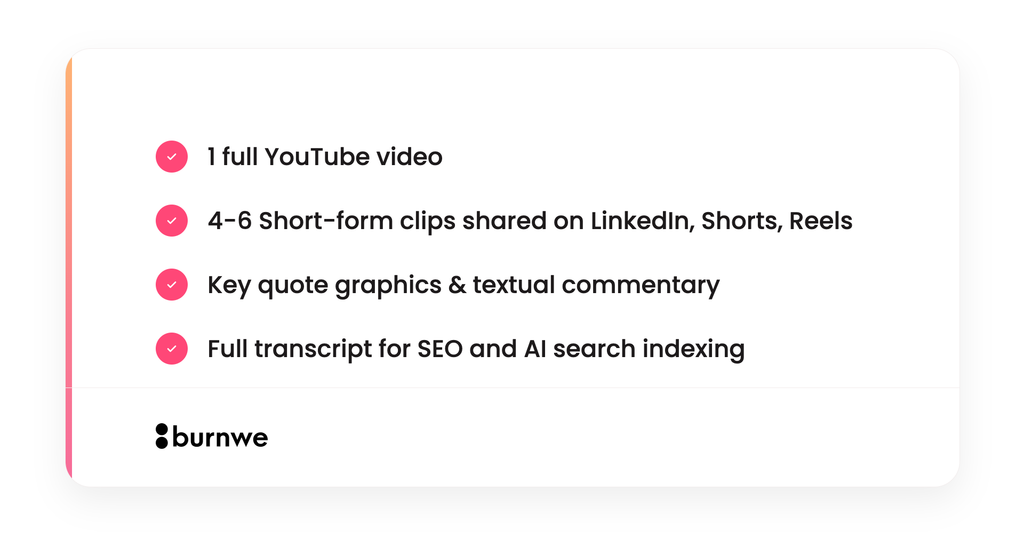
A video podcast episode feeds many assets, giving the SaaS company week worth of content:
Founder-Led Visibility Podcast Hosted by Anush Mnatsakanyan
Burnwe’s CEO and co-founder, Anush Mnatsakanyan, hosts the Founder-Led Visibility Podcast, where she interviews tech executives, SaaS founders, and marketing leaders.
The show demonstrates how a structured video podcast serves a dual purpose: it generates high-value industry conversations and provides a continuous stream of authentic video assets that fuel company-wide visibility across digital channels.
Prediction 4: Video is Optimized for Dual Audiences: Human Viewers and AI Search Engines
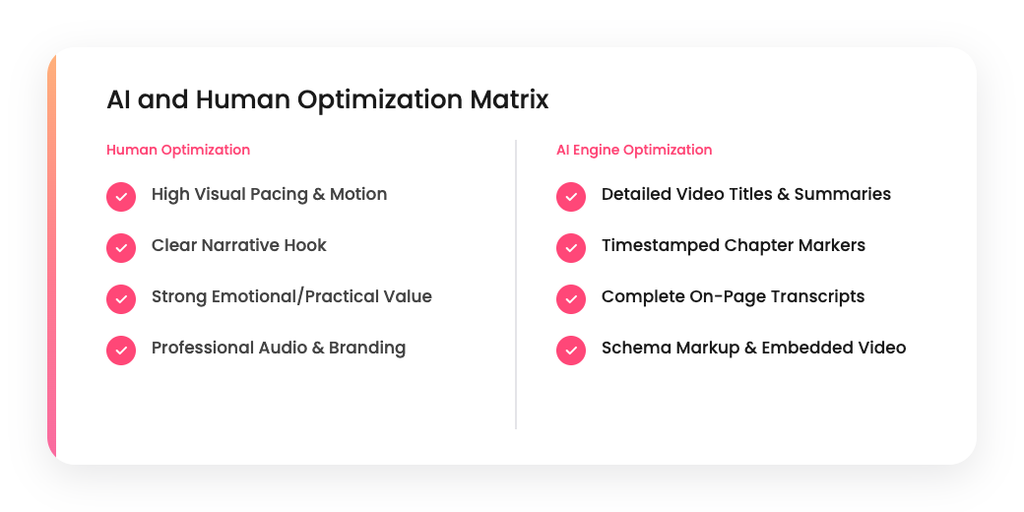
In 2027, SaaS teams will treat video as a source that AI search engines, such as Google AI Overviews, Perplexity, ChatGPT, Claude and Grok, can cite.
SaaS teams will write and structure video metadata and structure as deliberately for AI search engines, as they do for human audiences.
A research reports that in September 2026, YouTube held a 39.5% citation share in Google AI Overviews, the highest of any domain. It averaged about 30% across AI platforms.
The picture is uneven. The same report put YouTube at 0.5% in ChatGPT and 10.7% in Perplexity.
Burnwe’s tips on how to optimize SaaS product video for AI
- Publish a full, accurate transcript directly on the web page hosting the video.
- Include a clear 2-to-3 sentence summary immediately above the video player.
- Add timestamped chapter markers reflecting exact subtopics.
- Host videos on YouTube for wide indexability and embed them directly on target landing pages.
Prediction 5: Long-Form Video Makes a Strategic Comeback Across Platforms
While short-form video remains essential for top-of-funnel discovery, long-form video will experience a major comebacl for middle- and bottom-of-funnel conversion in 2027.
Buyer fatigue around ultra-short, superficial clips has created a strong appetite for deep-dive tutorials, comprehensive product walkthroughs, and technical breakdowns.
Platform algorithms will and some already are adapting accordingly:
Instagram Features: Head of Instagram Adam Mosseri recently announced native support for horizontal long-form up to 90 minutes videos. This shift allows brands to publish long-form, landscape-oriented masterclasses and product breakdowns natively without cropping or directing users off-platform.
YouTube Pacing: Educational and technical videos running 10 to 20 minutes consistently drive higher total session duration, giving SaaS companies the time required to demonstrate complex software solutions.
How SaaS and AI companies can integrate it in their marketing strategy?
Combining formats, that’s the solution. Use 30-to-60-second vertical clips to capture initial interest on social feeds, then direct engaged viewers toward high-production 10-to-15-minute horizontal videos that thoroughly explain your product’s architecture, workflows, and core value proposition.
Prediction 6: Subscription & Creative-on-Demand models will replace one-off video projects for growing tech teams
In 2027, fast-growing SaaS and AI companies are transitioning to subscription-based creative partnerships.
An ongoing retainer model gives marketing teams continuous access to design, editing, and strategic production capacity. This supports steady publishing schedules for founder clips, feature updates, localized assets, and podcast cutdowns without requiring a new contract for every deliverable.
Pricing in this model varies a lot. It’s important to pick an agency that can deliver ongoing video content within the nice and spelaization of your company. To explore video pricing in the industry, read Burnwe’s guide of video cost breakdown for 2027.
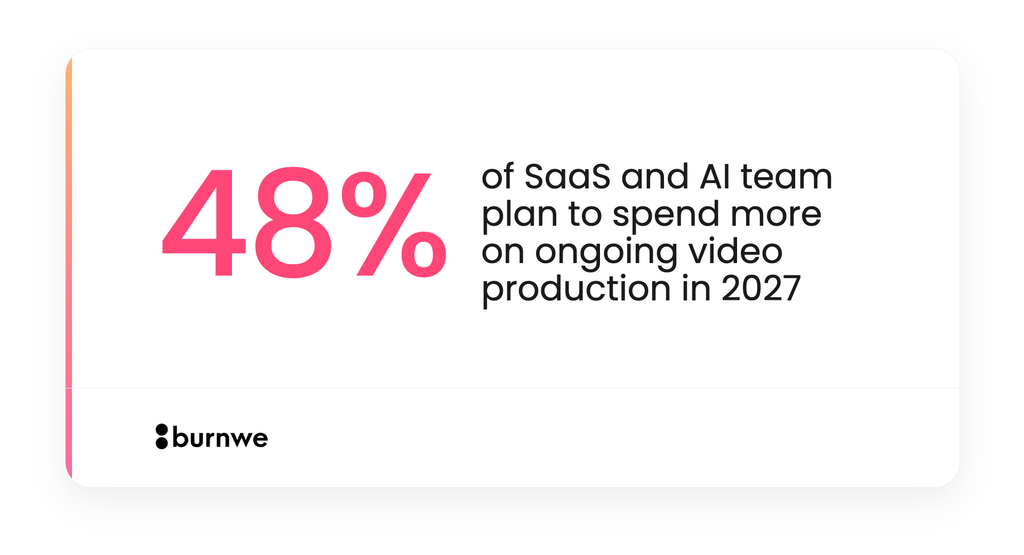
Burnwe offers a Monthly Subscription plan to SaaS and AI team, to support their ongoing video production needs, serving as an addition to the internal creative team and making sure that the company has aligned messaging across all platforms.
Watch the video Burnwe has made for Dexatel as a part of the Monthly Subscription plan.
Prediction 7: AI & SaaS Companies using Mascots to humanize complex tech
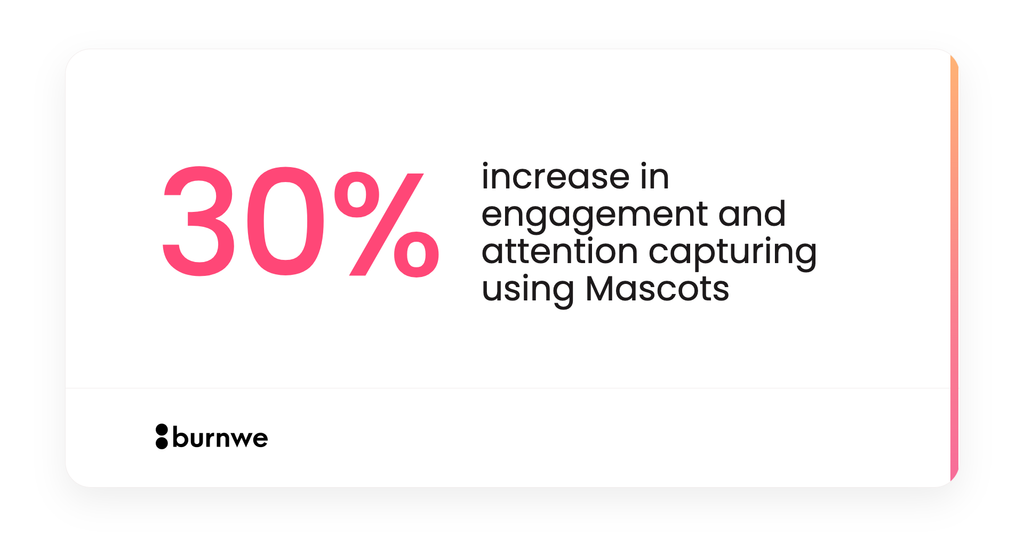
In 2027, major AI platforms and SaaS brands will continue shifting away from sterile, abstract UI toward character-driven video marketing and brand mascots. As software features become increasingly commoditized across tech, personality and visual identity have become key differentiators.
Giving an AI tool a visual mascot and a distinct personality, transforms complex algorithms into recognizable, relatable brand assets that lower user anxiety and drive consistent engagement across video formats.
The AI Mascot Ecosystem
- ChatGPT’s Pulsing “Dots”: OpenAI’s dynamic, expressive voice interface dot acts as an animated, non-verbal persona that visually signals real-time conversation and active reasoning.
- Meta Muse’s “Jolly”: Meta introduced “Jolly,” a friendly, fuzzy mascot designed specifically for Meta Muse to give its AI suite an approachable, human-centric aesthetic.
- Apple’s “Lil Finder Guy”: Apple’s introduced Finder as a 3D friendly little guy, keeping a core visual anchor across macOS micro-walkthroughs and product demos, serving as the benchmark for friendly software utility.
- xAI’s “Grok Bot”: xAI leverages the distinct Grok Bot persona to reflect its irreverent, conversational tone in promotional social clips and feature updates.
- Anthropic’s “Claw’d”: Anthropic’s retro 8-bit mascot, Claw’d, provides a playful, memorable little robot inside developer environments and product walkthroughs.
Why it Works in B2B Video Marketing:
- Immediate Trust & Accessibility: Abstract tech can feel cold or overwhelming. A friendly character lowers cognitive friction and makes complex workflows feel approachable.
- A Cost-Effective Anchor for Video Content: High-performing short-form video requires a consistent visual hook. A brand mascot gives marketing teams a flexible, recognizable character to host feature walkthroughs, share product news, and react to industry trends without relying on a live actor.
- Cross-Channel Consistency: Mascots provide a unified presence across touchpoints, guiding users through onboarding video tutorials, customer support clips, and social media media campaigns.
Prediction 8: Employee-Generated Content (EGC) Displaces Corporate Brand Channels
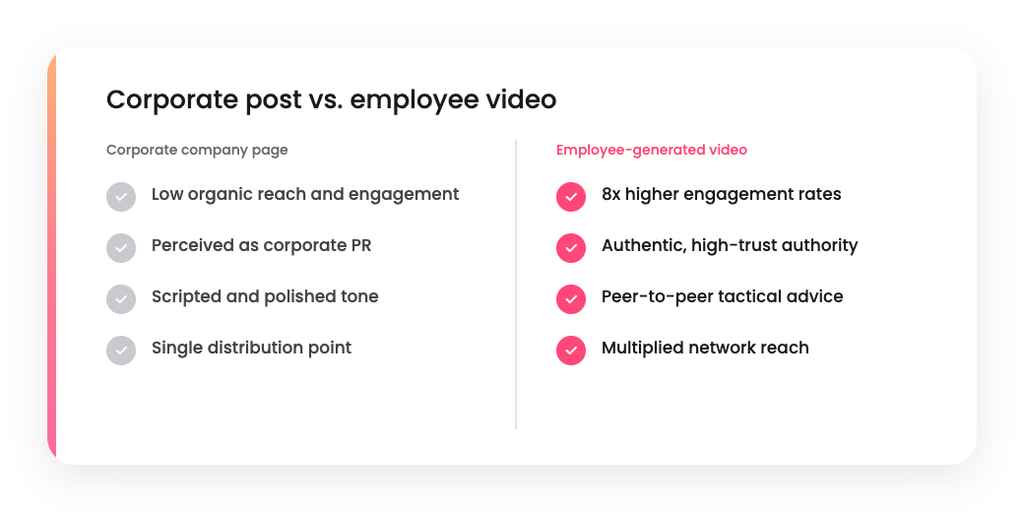
In 2027, B2B buyers will actively tune out faceless corporate logo accounts. The shift toward Employee-Generated Content (EGC), empowering product managers, engineers, customer success leads, and sales teams to create short-form videos—will become a primary growth engine for SaaS visibility.
While founder-led video sets the company vision, EGC builds operational trust by showing the real people behind the product. Content posted by individual employees consistently generates up to 8x higher engagement and significantly greater organic reach on platforms like LinkedIn than the exact same message posted by a corporate company page.
Why it Works for B2B Tech Brands:
- De-risks AI Commoditization: As AI makes synthetic marketing videos easy to generate, genuine videos recorded by real employees on their phones or laptops provide undeniable proof of human expertise.
- Multiplies Network Reach: Activating 5-10 key team members as video creators expands your brand’s reach across their combined personal networks.
- Speeds Up Buyer Trust: B2B buyers prefer learning from subject matter experts over reading marketing copy. Seeing an actual engineer demonstrate a software workflow builds immediate credibility.
However it it important to no just hand employees a corporate script. Instead, provide them with simple video prompts, branded overlay templates, and light editing support. Encourage 3 to 5 internal team members to record raw, 60-second video lessons about their daily work and publish them to their personal LinkedIn channels.
Prediction 9: One master video will become a family of cutdowns in every aspect ratio for every platform
In 2027, winning video teams won’t treat post-production reframing as an afterthought. They will plan every vertical (9:16), square (1:1), and portrait (4:5) cutdown during the pre-production stage – long before a single camera rolls or animation frame is rendered.
An Industry research reports that 71% of companies use social clips on LinkedIn, 49% on Instagram and 41% on YouTube. Also, 60% use social clips to link back to their website, driving the pipeline.
Why Multi-Format Planning Drives High ROI
Creating short clips is cost-effective when scenes are intentionally framed and scripted for multi-platform delivery. Conversely, trying to force a static, single-aspect-ratio animation into a vertical frame after the final edit leads to expensive re-renders and awkward cropping.
Duration strategy is also changing:
- Short-Form Cutdowns (15-30s): Drive top-of-funnel discovery, immediate engagement, and social feeds.
- Core Product Explainers (60-90s): Burnwe recommends a sweet spot of 60 to 90 seconds for main product explainers to deliver maximum narrative punch without losing viewer attention.
- Deep-Dive Walkthroughs (3-30 mins): Long-form formats – such as technical walkthroughs, webinars, and video podcasts, nurture high-intent buyers seeking detailed functional proof.
Check out how a master product video created by Burnwe for Yep AI translates into distinct, native social assets:
Always specify your required cutdowns, aspect ratios (16:9, 9:16, 1:1), and channel destinations directly in the creative brief. For a complete step-by-step breakdown on structuring multi-platform assets, read our complete Burnwe Video Customization & Platform Guide.
Prediction 10: Product videos will be built to survive a changing interface, even before the product exists
In 2027, SaaS and AI companies will build product videos using simple, modular blocks. Software interfaces change constantly, and showing an outdated app instantly hurts your credibility. By building videos in independent scenes, you can easily swap out a single updated screen without recreating the entire video from scratch.
Early-stage and stealth startups take this even further: they create high-impact launch videos from design files before writing a single line of code. At Burnwe, our team turns Figma designs into clean mockups and motion concepts. This lets stealth teams test demand, launch early campaigns, and pitch investors months before product release.
AI platforms and cloud tools update their dashboards almost every month. A modular setup keeps your videos completely up-to-date with your live app without blowing your marketing budget.
Having created over 1,200 videos for tech brands, we know how important it is to plan for updates early. When your interface changes, Burnwe offers full video repurposing and customization services, meaning we quickly update your existing videos with your new design so your content stays accurate. Plus, taking advantage of unlimited revisions during the storyboard stage keeps edits simple and affordable before final rendering.
What video marketing trends will not change in 2027?
Several basics will hold, whatever the tools do. A clear message, a specific viewer and one next step still decide whether a video works.
- Script quality. A weak script cannot be rescued by better animation or a better AI model.
- Product accuracy. Buyers compare the video with the real product, and mismatches cost trust.
- Length discipline. One idea per video still beats a tour of every feature.
- Typical timelines for custom work. Burnwe’s custom projects take 4 to 6 weeks from script to delivery. AI shortens some steps, but approvals and revisions still set the pace.
- Measurement. Views are easy to count and weak at predicting revenue. Track demo requests, trial starts or influenced pipeline.
How do the predictions change by company stage?
The right first move depends on your stage. A seed-stage team and a platform company should not copy each other.
| Stage | Best first bets for 2027 | Avoid |
|---|---|---|
| Stealth or pre-launch | Video built from design files, founder-led clips, AI captions | A large campaign before the product is stable |
| Seed to Series A | One hero explainer, a modular demo, a founder series on LinkedIn | Starting several channels at once |
| Growth stage | Cutdowns in every ratio, localization, a video podcast, a subscription | One-off videos with no distribution plan |
| Enterprise | Governance for AI use, disclosure rules, a video library owner | Unreviewed AI video in regulated markets |
Our view is that stage matters more than trend. A pre-launch team gains little from a podcast, and a mature team gains little from a first explainer.
What could prove these predictions wrong?
Any prediction can miss, and these are the main risks. Watching them helps you adjust early.
- AI quality jumps faster than expected. If AI tools reliably reproduce real interfaces, more final cuts could be AI-made.
- Platform changes. AI search citation shares moved sharply in 2025 data, so a platform update could change where video gets surfaced.
- Stricter rules or backlash. More disclosure laws, or a strong audience reaction to AI, would push teams toward human-made video.
- Budget pressure. If budgets tighten, subscriptions and podcasts may be the first to be cut.
The sound response to uncertainty is to run small tests. Review results every quarter, and update the plan.
Discover more AI Agent Demo Video Examples in our Portfolio.
Explore how we visualize the invisible
What should a SaaS team do in the next 90 days to prepare for 2027?
Start with three moves: audit your current videos, choose one founder or podcast channel, and set rules for AI use. These cost little and prepare you for most of the predictions above.
- Audit. List every video you have, where it appears and whether the product still matches it.
- Set an AI policy. Decide which steps may use AI, who reviews the output and when you will disclose.
- Plan one hero video and its cutdowns. Write the vertical and short versions into the brief.
- Pick one human channel. Choose a founder-led series or a video podcast, not both at once.
- Prepare the text layer. Add titles, summaries, chapters and transcripts to your existing videos.
- Set the measure. Choose one number that links video to pipeline, such as demo requests from pages with the video.
Treat predictions as bets to test. Run small experiments for a quarter, keep what works and drop what does not.
FAQ’s
What are the biggest video marketing trends for 2027?
The biggest trends are AI-assisted production, human and AI hybrid workflows, founder-led video, video podcasts and video built for AI search. Subscriptions, localization and modular product videos round out the list. Each is explained above with its evidence.
Will AI replace video agencies by 2027?
Unlikely. AI is taking over drafts, captions and dubbing, but concept, script quality and final approval still depend on people. Wistia’s survey lists accuracy, ethics and role replacement among the top worries about AI in video.
Do I need to disclose AI-generated video?
In the EU, rules on disclosing realistic synthetic video took effect on August 2, 2026, and can reach non-EU advertisers whose content is seen in the EU. An IAB study found 73% of young consumers said disclosure would raise or not change their likelihood to buy. Ask a lawyer about your specific case.
Should a SaaS company start a video podcast?
Start one if you have a clear audience, a regular host and the time to keep going. Wistia found lack of time is the top barrier, and most podcasters aim for brand awareness, not quick leads. Plan clips and transcripts from the first episode.
How long should a SaaS video be in 2027?
Use about 60 seconds, up to 90, for an explainer. Use longer formats for webinars, podcasts and walkthroughs, since Wistia finds software audiences often watch 3 to 30 minute videos. Match length to the job of each video.
How can small teams prepare for these trends on a budget?
Begin with the text layer and one human channel: titles, transcripts, a founder clip series and AI captions. These cost far less than a full production. Add a produced explainer when the message is clear.
Want to partner with Burnwe for your neext video?
Explore how we visualize the invisible
Sources
- Wistia, 2026 State of Video Report
- Tubefilter, IAB generative AI consumer study
- Dickinson Wright, EU AI Act guidance on AI disclosure for advertisers
- Edelman and LinkedIn, Thought leadership influences B2B sales
- 9to5Google, YouTube podcasts reach 1 billion monthly active viewers
- BrightEdge, YouTube presence in AI search
- Burnwe