How do tech companies get started with video marketing?
Video marketing for tech companies starts with one buyer, one goal and one video: usually a 60-second explainer on the homepage. Add a product demo for evaluators and a customer story for proof, then cut short clips for LinkedIn and YouTube. Start with the video that answers the question buyers ask first.
Why does video matter for B2B tech and SaaS companies?
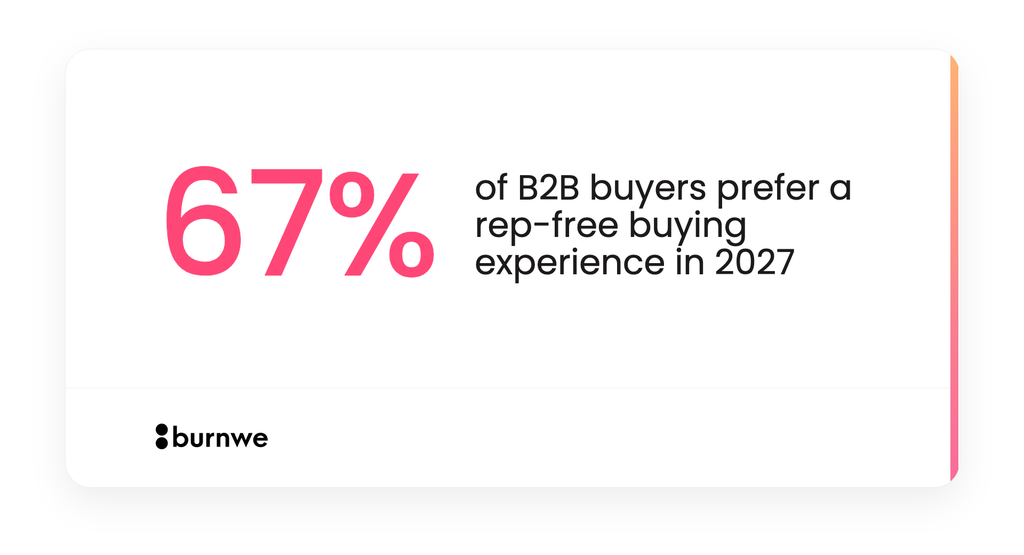
Video matters because tech buyers research on their own, and a video is often the only product walkthrough they see before choosing a vendor. A survey of 646 B2B buyers in late 2025 found that 67% prefer a rep-free buying experience. Separate 2025 buyer research reports that the winning vendor was already on the day-one shortlist 96% of the time.
Adoption is already near-universal, so the question is no longer whether to use video. In 2026, 91% of businesses use video as a marketing tool, and 82% of marketers report a good return on it. That return figure fell from 93% the year before, so the bar has moved from having a video to having a plan for it.
Why does video marketing for tech companies need a different approach?
Video marketing for tech companies differs because the product is abstract, the buyers are technical and releases outpace production schedules. Viewers cannot watch an API call, so the script must turn the product into one visible task, such as a resolved ticket. In one SaaS video survey, 37% of viewers disliked unclear explanations and 21% disliked length, so clarity loses more viewers.
Technical buyers distrust claims, so proof matters more than polish. Of 230+ B2B tech marketing leaders, 42.7% ranked customer outcomes as top proof, yet only 38% had a standard way to collect it. Collect one named outcome before you plan your first video, even if it is a single metric from a pilot customer.
Software also changes every few weeks, which dates interface footage quickly. Motion graphics and animation survive an interface update better than screen recordings, while a screen-based demo needs a refresh whenever the workflow changes. Decide which videos are meant to last a year and which you expect to replace.
Which video should a tech company make first?
Make first the video that answers your buyers’ earliest question: usually a 60-second homepage explainer, then a product demo, then a customer story. Each format answers a different question at a different stage, so the order follows the buyer’s journey rather than your production convenience.
| Buyer question | Video type | What it must show | Best place to publish |
|---|---|---|---|
| What does this product do? | Explainer video | The problem, the product’s one job and the outcome | Homepage, LinkedIn, paid social |
| Will it work the way I need? | Product demo video | One real workflow, from input to result | Product page, sales emails, evaluation pages |
| Can I trust it? | Customer story or testimonial | A named customer, a real problem and a stated result | Pricing page, sales decks, case study pages |
| How do I get started? | How-to or onboarding video | One setup step ending in the next step | Help center, onboarding emails, in-app |
| What is new? | Product launch video | One release and who it helps | Product Hunt, LinkedIn, release notes |
Among video marketers, 68% have made explainer videos and 57% testimonials, but only 39% have made product demos. Buyer research ranks demos and free trials among the most influential purchase resources. A clear demo is therefore an under-used second video.
Dropbox’s demo shows the effect of leading with the product. A roughly four-minute screencast of file syncing, made before the product was finished, took the beta waitlist from about 5,000 to 75,000 sign-ups overnight.
A landing-page test shows the explainer effect. A “coming soon” page converted at 6.5% without video, 11% with an animated explainer and 13% with it in a pop-up. The case study omits the sample size, so treat the lift as indicative, and find more campaigns in our video marketing examples guide.
Turn your complex agent into a clear demo video now.
Explore how we visualize the invisible
What should a tech team prepare before making the first video?
Prepare four inputs before anyone writes a script: one buyer, one outcome, one proof point and access to the product. Teams that skip this step spend their revision rounds discovering what the video should say.
- The buyer: role, company size and the question they ask before buying.
- The outcome: one task the product completes, stated in plain words, with a real number if you have one.
- The proof: a named customer result or a measured internal figure. If you have none yet, choose a demo over a testimonial.
- The product material: a staging account, screens, a recorded walkthrough or Figma files.
Lock the script before any visual work begins, because without a clear messaging all the pretty visuals will be vain. At Burnwe our tech-specialized professional team of content writers make sure the script is perfectly aligned with your brand and goal to make sure the video serves all the intended goal and make your video marketing a success.
Read more about reaching business goals through video marketing in Burnwe’s detailed guide.
How long does the first video take, and what should you budget?
Plan on 4 to 6 weeks from script to delivery for a custom animated explainer for better result and budget for promotion as well. Simpler formats move faster: B2B tech teams typically need 4 to 14 days to go live, or 1 to 3 with reusable assets.
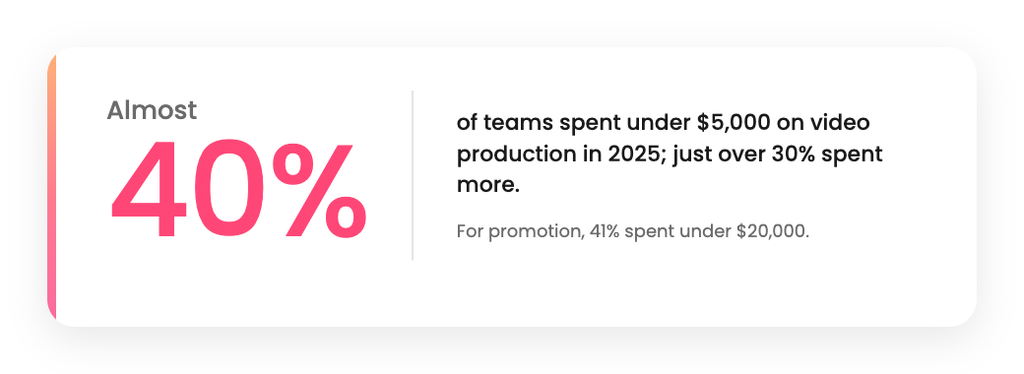
Spending is modest at the start. In a 2026 survey of nearly 1,000 marketers, almost 40% spent under $5,000 on production in 2025 and 41% spent under $20,000 on promotion. Those figures suggest promotion budgets run larger than production budgets, so reserve money to distribute the video.
Should a tech company hire an agency or build an in-house video team?
Most tech companies end up with a hybrid: in-house owners for short clips and an outside team for scripted explainers. In-house video teams grew from 35.7% to 54.3% of surveyed marketers in a year, yet agency use also rose 54%. Nearly half of B2B tech teams use a hybrid production model, and contractors account for about half of a typical production budget.
Build in-house for high-volume formats such as social clips, release notes and onboarding videos. Hire a specialist for explainers, AI agent demos and launch videos, because abstract software needs a story before a camera. To compare the two routes in detail, read video marketing vs video production for SaaS.
AI now sits inside both routes, led by captions. More than a third of marketers use AI in video workflows, and 62% use it or plan to within a year. Burnwe uses AI to speed up production, while creative direction and final quality stay human-led.
Another great alternative is a Video Creative as a Service, where tech-specialized teams serve as an extension to your creative team providing your tech team with a consistent content flow to support your marketing campaign at all stages.
Example of a video created by Burnwe for Dexatel as a part of the Video Creative as a Service plan.
How do you pick a video marketing partner for a tech product?
Pick a partner by checking relevant work, process clarity and written scope, not by price alone. Ask every candidate the same five questions and compare the answers side by side.
- Relevant work: two videos for software or AI products, with the result each achieved.
- Script ownership: who writes the script and whether you approve it before visuals begin.
- Revisions: how many rounds you get, and at which stages.
- Timeline and price: a stated turnaround and a written scope.
- Format range: whether the team delivers vertical and short cutdowns for each channel.
For a shortlist of named agencies with listed prices, see our guide to the best video marketing agencies San Francisco. To judge style and range in tech categories, browse the demo videos in the Burnwe portfolio.
Where should tech companies publish and distribute marketing videos?
Publish the master video on your homepage and YouTube, and the short cutdowns on LinkedIn, where B2B tech buyers already watch. In a 2026 survey of nearly 1,000 marketers, 81% shared video on LinkedIn and 76% on YouTube. LinkedIn was also the top channel for repurposed clips and paid video ads.
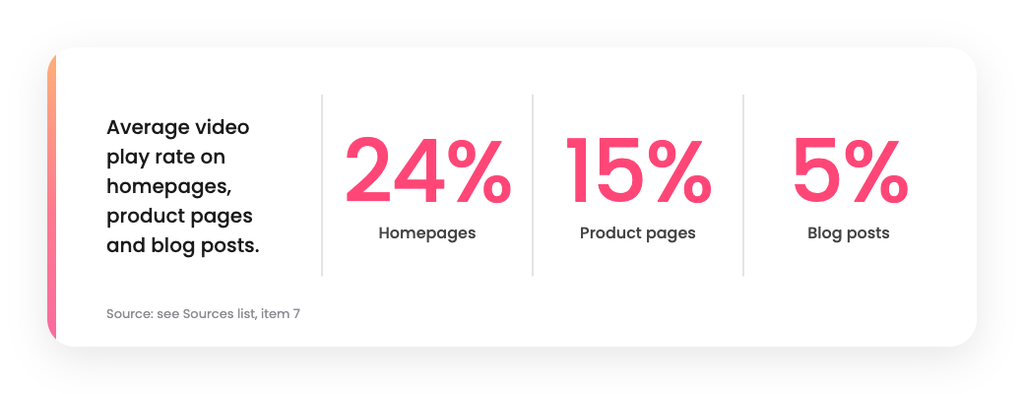
Your own site still matters, though only 65% of companies distribute video on landing pages versus 83% on social. Average play rates were 24% on homepages, 15% on product pages and 5% on blog posts. Put the video on the homepage and product pages before the blog.
Surround each video with text that search engines and AI tools can read: a descriptive title, a transcript and a short summary. Footage alone is read far less reliably than the words around it.
How long should a tech marketing video be?
Keep most tech marketing videos between 30 seconds and 2 minutes, and use about 60 seconds for a homepage explainer. Platform data covering more than 13 million videos show that videos under five minutes earn the highest engagement overall. Burnwe recommends about 60 seconds for marketing videos, and 90 seconds at most.
Longer formats have a role for buyers who are already comparing vendors. Webinar replays of 31 to 45 minutes earned more than twice the engagement of replays under 30 minutes. Use short clips to win attention and longer videos to hold evaluators.
How do you measure early results from video marketing?
Measure each video against one goal, such as sign-ups, demo requests or assisted conversions, rather than views alone. Less than half of marketers connect their video platform to a CRM or email tool, so most cannot see which viewers become leads. Make that connection before launch so you can compare conversion between viewers and non-viewers.
Run one controlled test early. Publish your landing page with and without the explainer, as in the sign-up test above, and compare conversion after a fixed period. A full metric table by funnel stage is in our video marketing examples guide.
Discover more AI Agent Demo Video Examples in our Portfolio.
Explore how we visualize the invisible
FAQ’s
How do you start video marketing for a tech company?
Pick one buyer question, make one 60-second explainer that answers it and publish it on your homepage and LinkedIn. Measure sign-ups or demo requests against a baseline you recorded before launch. Add a product demo and a customer story once the first video has data.
Which video types work best for B2B tech and SaaS marketing?
Explainers, product demos, customer stories and onboarding videos work best, each at a different buying stage. Explainers show the problem and the product’s job, demos show one workflow, and customer stories add proof. Among video marketers, 68% make explainers but only 39% make demos.
How much should a tech company spend on its first marketing video?
In a 2026 survey of nearly 1,000 marketers, almost 40% spent under $5,000 on video production in 2025, and just over 30% spent more. Custom animated work varies with length, style and revisions, so ask for a written scope. Reserve budget for promotion as well.
Is video marketing worth it for a small tech team?
Yes, if you start with one video tied to one goal. In 2026, 82% of marketers report a good return on video and 85% say it has generated leads. The return figure fell from 93% the year before, so a plan matters more than volume.
Can you make a marketing video before the product is built?
Yes. For example, Dropbox grew its beta waitlist from about 5,000 to 75,000 sign-ups with a demo made before the product was finished. Burnwe builds videos from Figma designs for stealth-stage products, which works best when the core workflow is stable .
Want to partner with Burnwe for your neext video?
Explore how we visualize the invisible
Sources
- Gartner, 67% of B2B Buyers Prefer a Rep-Free Experience (March 2026)
- 3rd and Lamar, B2B buyer behavior: where video has the most influence
- ClickMinded, Video Marketing Statistics 2026
- Wyzowl, SaaS videos that convert
- Webtonic, B2B SaaS and tech video marketing statistics 2026
- Wistia, State of Video 2026
- PPC Land, LinkedIn beats YouTube as top B2B video channel
- Wistia, The video strategy shifts worth making now
- YourStory, Dropbox’s demo video and 75,000 sign-ups
- Unbounce, Using Video to Lift Landing Page Conversion Rate by 100%
- Burnwe